The Earth keeps time badly. Which is to say: beautifully.
A deep-time concept tied to the opening demonstration, orbital cycles, recurrence, and rhythm without intention.
Record
Deep time — note
Systems
Medium
Status
Open
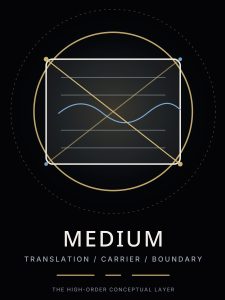
IRhythm without intention
Orbital cycles, sediment couplets, the metronome on the bench: recurrence that never quite repeats, and was never trying to.
IINote on recurrence
Archive Entry 07: The Earth Keeps Time Badly.
Human beings expect clocks.
The Earth has never promised them.
Its records are measured in pulses that drift against one another: orbital cycles that lengthen and shorten, ice sheets that arrive late and depart reluctantly, seas that remember coastlines no map has drawn, continents that move too slowly for a lifetime but too quickly for eternity.
The pattern is not repetition.
It is recurrence.
No interval returns exactly as it was. Every cycle carries the memory of those before it while refusing to become predictable. Precision belongs to instruments. History belongs to accumulated departures.
This distinction mattered more than anyone recognized at the beginning.
Researchers spent months searching for a clock that would make the observations line up. They assumed disagreement meant error. They assumed the Earth had slipped out of rhythm.
Only later did they understand that the rhythm had never been regular.
Bad timekeeping was not the problem.
It was the observation.
Notification
Be told when the record opens.
Release notification and occasional entries from the Rusk Archive. No hype, no schedule you did not ask for.